Features
Supplier messages
Writes each supplier's order out, one line per product, ready to paste into WhatsApp. A person still sends it.
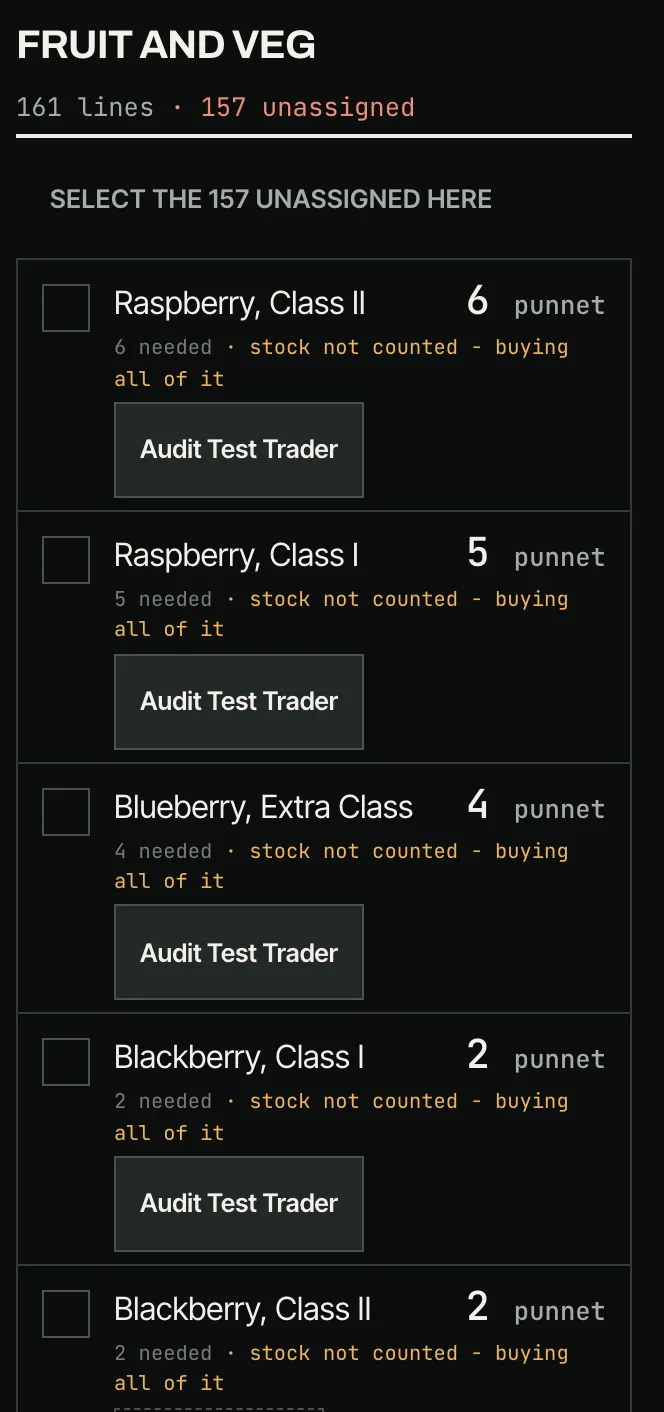
Supplier messages is the buy list, split by trader, written out the way a buyer already writes it - one product per line, no tables or symbols a phone mangles - and ready to paste into that supplier's WhatsApp thread. It is built from the split buy list, and it records when it is copied so nothing goes out twice.
A buyer with six suppliers to message is typing the same list out six times, product by product, from memory or a paper buy list. This does not change how the order is sent - it is still a person, in WhatsApp, pressing send - it just removes the retyping in between.
How it works
- 01Once the buy list is split across suppliers, each trader's own share is written out as a message, not just a list on a screen.
- 02One line per product: quantity, unit, description. The way a buyer already types it by hand, headed with who it is from and the day it is for.
- 03No tables, no markdown, no bullet symbols. The formatting a phone keyboard mangles is left out on purpose.
- 04The message is copied, ready to paste straight into that supplier's WhatsApp thread.
- 05Copying it is recorded against that trader and that buy list, so a locked phone or a change of buyer never loses track of who has been messaged.
What one supplier's share looks like
What it replaces
Supplier messages replaces typing the same order out again, product by product, into a separate WhatsApp message for every supplier. The list is written once and copied, not retyped five or six times over.
What it works with
- Buy listEach supplier's share is built straight from the split buy list.
- WhatsAppThe finished message pastes straight into that supplier's own WhatsApp thread.
- Order takerThe same channel, the other direction: orders coming in from customers.
Plainly
What it will not do on its own
- It does not send the message for you. A person copies it, pastes it into WhatsApp, and presses send - that guard rail is deliberate.
- Automatic WhatsApp sending is waiting on Meta's template approval, the same as every other automated message this product drafts.
- It will not choose which supplier gets which line. That split is set on the buy list first; this is what goes out once it is.
What it replaces
Typing the same order out again, product by product, into a separate WhatsApp message for every supplier.
Time it saves
Say five suppliers get a message every morning. Typing each one out by hand is the best part of ten minutes gone before the market even opens.
Worth in money
Say those ten minutes are a buyer's wage of around £13 an hour - a little over £2 a morning, or close to £15 across a six-morning week, just for not retyping the same list five times over.
Questions people ask
- Does it send the order to my suppliers automatically?
- No. It writes the message and copies it, ready to paste into WhatsApp - a person still opens the thread and presses send, by design.
- What does the message actually look like?
- Plain text, one product per line - quantity, unit, description - the way a buyer already writes it by hand, with no tables or symbols a phone keyboard could mangle.
- How does it know which suppliers to message?
- From the buy list. Once a day's orders are split across the suppliers who carry each line, each trader gets their own share written out as their own message.
- What stops the same order being sent to a supplier twice?
- Copying a supplier's message is recorded against that trader and that buy list, so it is always visible whether that message has already gone out.
Give us one night.
Send us one evening's orders. We run the night next to you. In the morning you compare the two.